
Survivors of the catastrophic flash floods that tore through Nepal’s border region with Tibet have begun describing the moments when ordinary life vanished beneath a wall of water, mud and debris. Their accounts reveal a disaster that arrived with almost no warning, erased entire settlements within minutes, and left those who lived scrambling up slippery hillsides while watching homes and loved ones disappear.
The Sudden Onset
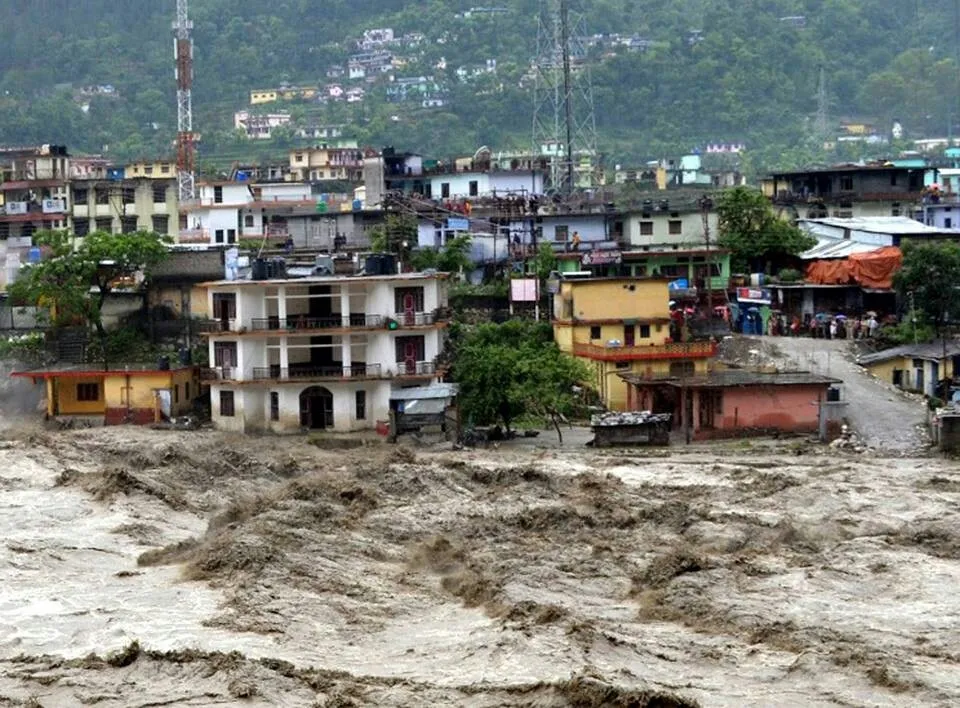
The floods struck on the morning of 26 August 2026. Many survivors recall a sound like thunder or a strange hissing before the landscape itself changed. In the border village of Timure and surrounding settlements along the Bhote Koshi and Trishuli river systems, a grey-brown surge of sand, pulverised rock and water rose with terrifying speed. In places the mud line later measured more than 650 feet high on the valley walls.
Dawa Lama, 45, was at home when he heard a thunderclap and felt a sudden breeze. Moments later an enormous wave of muddy water slammed into the house he had lived in for twelve years. The flood carried away his belongings and, more devastatingly, his wife and their two young daughters, aged seven and eight. “They all died, and I lived,” he said, still struggling to absorb the loss. He managed to outrun the water by climbing higher up the valley; his family did not.
Climbing for Survival
Across the affected areas, survival often depended on reaching higher ground in seconds. Residents and visitors describe sprinting up narrow, muddy paths, leaping over fences and scrambling across rocks while the flood rose behind them.
One man recalled injuring his hand as he climbed over a wire fence yet continuing to run. Looking back, he watched houses in the Timure market being swept away one after another. From a forest roughly 500 metres uphill he later surveyed the ruins: bodies floating in the water and a once-familiar settlement reduced to a vast expanse of sand and mud. He and others spent the night in the forest before being airlifted out the following day.
A hairdresser who fled his salon said he and two companions simply “jumped and jumped” up the hillside. Had they hesitated, he believed, they would not have survived. A shopkeeper who heard the roar of the water before seeing it ran uphill with the muddy surge already at his heels; a bridge collapsed behind him. He estimated he had perhaps twenty seconds of margin.
Families Torn Apart
Many who lived did so with the knowledge that others did not. Kalpana Malla from Nuwakot district watched her father, mother, sister and the sister’s children swept away. She and her son reached a rooftop and survived; contact with the rest of the family was lost. Another man tried to hold his wife’s hand as the flood entered their home, but she was pulled away. Hours later a helicopter rescued him from the upper floor. “My wife is still somewhere beneath the mud,” he said.
Children were especially vulnerable in the chaos. Some were swept from the grasp of adults trying to lead them to safety. Others fell and were injured while running. At hospitals and temporary camps, relatives continue to search lists of the injured and wait for news of the missing.
The Landscape Afterward
Where settlements once stood, survivors found only mud and scattered debris. Houses, shops, schools, fields, roads and bridges had been dragged downstream or buried. In many places even the wreckage seemed to have vanished. Army officials pointed to sites where hydropower installations had stood; little remained. The river had rewritten the valley floor in a single morning.
Those who reached higher ground spent hours or an entire night in forests, goat sheds or on exposed slopes before rescue helicopters could reach them. Some received noodle packets dropped from the air. Only after boarding the aircraft did many begin to register that they had survived.
The Continuing Search
Official figures have continued to rise. Hundreds of bodies have been recovered, while the number of people still unaccounted for remains in the thousands. Among the missing are local residents and foreign visitors, including pilgrims and tourists. Search teams work through thick mud and debris under difficult conditions, knowing that the window for finding survivors narrows rapidly.
The accounts of those who lived underscore both the suddenness of the event and the narrow margins that separated life from death. A few seconds’ head start, a secure handhold on a hillside, or the simple decision to run uphill rather than toward a familiar road determined outcomes. For many survivors the physical escape has been followed by the heavier burden of loss—homes gone, livelihoods erased, and family members still missing beneath the mud.
As rescue and recovery operations continue, the personal testimonies emerging from the valleys along the Nepal-Tibet border provide a human measure of a disaster whose scale is still being calculated. They describe not only the force of the flood but the speed with which it transformed ordinary mornings into a desperate scramble for higher ground, leaving behind a landscape of mud and an enduring search for those who could not outrun it.
Read more – Instantdua.com