
India’s defence diplomacy has remained active through a series of joint military exercises that strengthen interoperability, share operational best practices and signal strategic partnerships. The ongoing Yudh Abhyas 2026 with the United States stands out for its dual-location format and technology focus, while several other bilateral and multilateral drills in recent months have expanded cooperation across different theatres and domains. Parallel to these engagements, India’s domestic defence production and exports have reached record levels, reflecting growing self-reliance and global reach.
Yudh Abhyas 2026: Mountain and Desert Interoperability
The 22nd edition of the India-US Army exercise Yudh Abhyas is being conducted simultaneously at the Auli Foreign Training Node in Uttarakhand and the Mahajan Field Firing Range near Bikaner in Rajasthan. Approximately 600 personnel from each side are participating. The opening ceremony took place in mid-September 2026 at Auli.
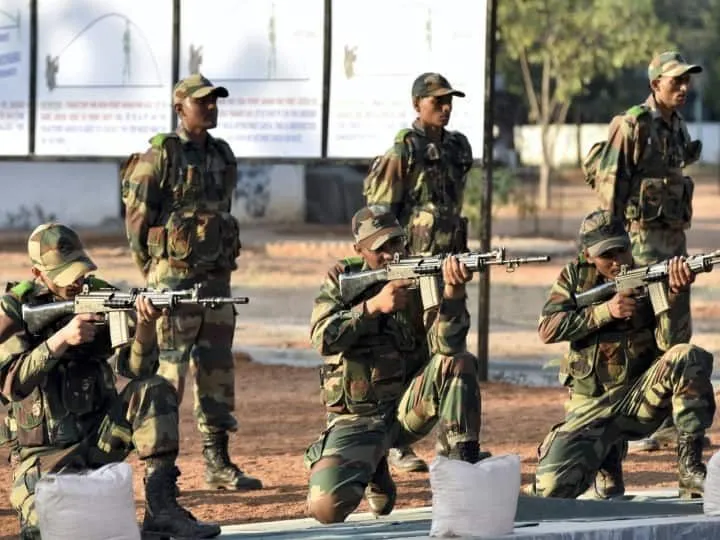
The exercise aims to enhance joint military capability for the employment of Integrated Battle Groups in mountainous and semi-mountainous terrain, with emphasis on infantry-dominated operations. Technology infusion forms a major component. Troops are training with drones and autonomous systems for surveillance and reconnaissance, while contemporary weapon systems are being demonstrated at Mahajan. Building-clearance and room-intervention drills simulating close-quarter counter-terror operations have already been conducted, involving assault teams supported by drones, robotic dogs, canines and snipers.
The US contingent includes elements from the 11th Airborne Division, known as the “Arctic Angels,” reflecting expertise in extreme cold-weather and difficult terrain operations. The dual-venue format exposes participants to contrasting operational environments—high-altitude mountains near the northern borders and desert conditions in the west—thereby testing joint planning and execution across varied settings.
IMBAX 2026: India-Myanmar Cooperation
Running almost concurrently, the fifth edition of the India-Myanmar bilateral army exercise IMBAX is being held at the Joint Training Node in Umroi, Meghalaya, from 15 to 28 September 2026. The 14-day drill focuses on enhancing interoperability and synergy for operations under a United Nations mandate. It provides a platform for exchanging operational experiences and best practices while strengthening mutual understanding and military-to-military cooperation between the two armies.
Such exercises with neighbouring countries help build practical coordination for potential peacekeeping and stabilisation roles, while also contributing to regional confidence-building.
LAMITIYE 2026: First Tri-Services Edition with Seychelles
In March 2026, India and Seychelles conducted the 11th edition of Exercise LAMITIYE at the Seychelles Defence Academy. For the first time, the exercise was expanded to a tri-services format, involving personnel from the Indian Army, Navy and Air Force alongside the Seychelles Defence Forces. The Indian contingent included troops from the Assam Regiment, as well as participation by INS Trikand and a C-130 aircraft.
LAMITIYE, which means “friendship” in Seychelles Creole, is a biennial event that has been held since 2001. The 2026 edition concentrated on sub-conventional operations, particularly tactical drills for neutralising threats in semi-urban environments. The focus on peacekeeping-relevant skills and inter-service coordination reflects the evolving nature of security challenges in the Indian Ocean region.
Sea Dragon 2026: Multinational Anti-Submarine Warfare
Exercise Sea Dragon 2026, a United States Navy-led multinational anti-submarine warfare training activity, brought together the Indian Navy with the Japan Maritime Self-Defense Force, Royal Australian Air Force and Royal New Zealand Air Force. Conducted at Andersen Air Force Base in Guam, the exercise trained participants in anti-submarine warfare tactics and collective responses to maritime security challenges in the Indo-Pacific. It strengthened operational understanding among the participating forces in a domain of growing strategic importance.
MILAN 2026: Large-Scale Multilateral Naval Engagement
The 13th edition of the multilateral naval exercise MILAN culminated in late February 2026 with a closing ceremony on board India’s indigenous aircraft carrier INS Vikrant off Visakhapatnam. Hosted by the Indian Navy under the theme “Camaraderie, Cooperation, Collaboration,” the exercise saw participation on an unprecedented scale—75 countries, 42 ships and submarines, and 29 aircraft. MILAN continues to serve as a major platform for enhancing maritime domain awareness, interoperability and collective response capabilities among navies of the Indo-Pacific and beyond.
Defence Production and Exports Reach New Highs
These operational engagements are underpinned by steady growth in India’s domestic defence industrial base. In financial year 2025-26, annual defence production touched a record Rs 1.78 lakh crore, registering a 15.6 per cent increase over the previous year and more than doubling since 2020-21. Defence Public Sector Undertakings and other public sector entities accounted for roughly 76 per cent of the output, while the private sector contributed about 24 per cent—its highest share so far in absolute terms.
Exports also achieved a new peak of Rs 38,424 crore in FY 2025-26, marking an approximate 63 per cent year-on-year rise. India supplied defence equipment to more than 80 countries, and the number of exporting firms increased to 145. The private sector’s share in exports stood at around 45 per cent, indicating a broadening and more competitive industrial ecosystem.
Strategic Significance
Taken together, the recent series of exercises illustrates the breadth of India’s defence partnerships—from high-end interoperability with the United States and complex multilateral naval gatherings to focused bilateral training with neighbours and Indian Ocean partners. The simultaneous emphasis on technology, multi-domain operations and sub-conventional skills mirrors the changing character of modern warfare.
At the same time, the record figures for production and exports demonstrate that India’s external military engagement is increasingly supported by indigenous capability. The growth in private sector participation and the widening export footprint suggest that the country’s defence industrial base is moving beyond traditional public-sector dominance toward a more diversified and outward-looking model.
Joint exercises remain practical tools for building trust, refining tactics and ensuring that forces can operate together when required. The combination of sustained training engagements and rising domestic output points to a dual track of capability development and partnership deepening that continues to shape India’s defence posture.
Read more – blessandseemusic.com