
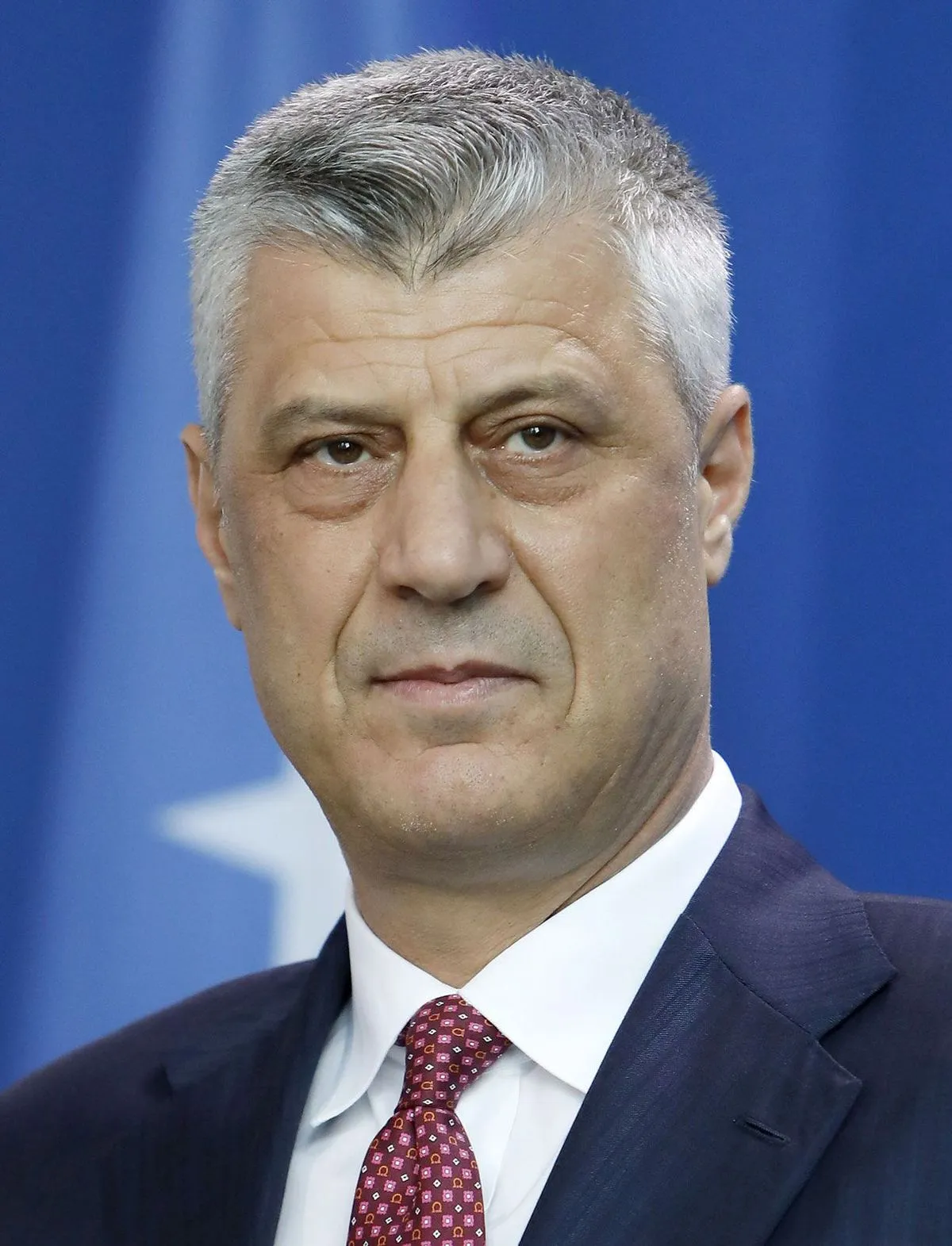
Hashim Thaçi, the former president of Kosovo and a key political figure in the country’s path to independence, was sentenced on 16 September 2026 to 25 years in prison by the Kosovo Specialist Chambers in The Hague. The European Union-backed court found him guilty of war crimes committed during the late 1990s conflict. This marked the culmination of a long legal process that has divided opinions in Kosovo, where Thaçi is widely regarded as a national hero, and raised broader questions about accountability for wartime actions on all sides.
Background of the Kosovo Conflict and Thaçi’s Role
The Kosovo war of 1998–1999 pitted ethnic Albanian fighters against Serbian forces under the then-Federal Republic of Yugoslavia. More than 10,000 people died, and the conflict ended after a NATO intervention. The Kosovo Liberation Army (KLA), an ethnic Albanian guerrilla force seeking independence, played a central role. Thaçi served as a senior commander and head of the KLA’s political directorate on its general staff. After the war, he became a leading politician, serving as Kosovo’s first prime minister following the 2008 declaration of independence and later as president until 2020.
During the conflict, both sides committed serious violations. Serbian forces were responsible for widespread atrocities against Kosovo Albanians. At the same time, allegations emerged that KLA members targeted perceived opponents, including political rivals, suspected collaborators with Serbian authorities, and members of minority communities such as Serbs and Roma.
The Marty Report and Origins of the Specialist Chambers
A pivotal development came in 2010 when Swiss politician Dick Marty authored a report for the Council of Europe. Known as the Marty report, it alleged that the KLA operated secret detention centres where many Serbians and others were subjected to inhuman and degrading treatment before ultimately “disappearing.” The report also raised allegations of organ trafficking linked to some of these cases, building on earlier claims by former International Criminal Tribunal for the former Yugoslavia prosecutor Carla Del Ponte.
Although organ trafficking did not form part of the eventual charges against Thaçi, the Marty report created significant international pressure. It contributed directly to the creation of a specialised judicial mechanism. In 2015, under strong encouragement from the European Union and other Western partners, Kosovo’s assembly amended its constitution and passed legislation establishing the Kosovo Specialist Chambers and Specialist Prosecutor’s Office. These institutions operate under Kosovo law but are based in The Hague, staffed by international judges and personnel, and focus on serious crimes linked to the 1998–2000 period, particularly those highlighted in the Council of Europe report.
The court was designed to address cases that domestic institutions were seen as unable or unwilling to handle impartially, given the sensitivity of prosecuting former KLA figures celebrated as liberators in Kosovo society.
The Indictment, Resignation and Trial
In 2020, the Specialist Prosecutor’s Office confirmed an indictment against Thaçi and three other senior former KLA figures: Kadri Veseli (former intelligence chief and parliament speaker), Jakup Krasniqi (former spokesman and parliament speaker), and Rexhep Selimi (former operations head). The charges centred on a joint criminal enterprise aimed at consolidating KLA control by targeting opponents through arbitrary detention, torture, cruel treatment and murder.
Thaçi resigned as president in November 2020 upon confirmation of the indictment, stating he did so to protect the integrity of the office. He and the co-defendants were transferred to detention in The Hague. All pleaded not guilty. The trial began in April 2023 and lasted several years, featuring extensive witness testimony. Judges noted challenges including witness intimidation and some retractions of evidence, while praising the courage of those who testified.
The court examined the extent of the accused’s control over KLA structures and whether the crimes formed a pattern of abuse against civilians and political opponents, many of whom were Kosovo Albanians associated with rival groups, as well as Serbs, Roma and others perceived as collaborators.
The Verdict and Specific Convictions
On 16 September 2026, the trial panel convicted Thaçi of four counts of war crimes: arbitrary detention of at least 385 people, cruel treatment of at least 49, torture of at least 303, and murder of 96 individuals. Presiding Judge Charles Smith stated that Thaçi had actively participated in and encouraged the crimes, using his leadership position, authority and standing. The panel found he played a key role in setting up detention facilities, identifying perceived opponents, and overseeing arrests, detentions and, where deemed necessary, killings. The court also determined he personally participated in certain incidents, including the arrest and interrogation of parliamentarians and the murder of one specific individual.
Co-defendants received sentences of 25 years for Krasniqi, 18 years for Veseli and 13 years for Selimi, with credit for time already served. All four were acquitted of crimes against humanity charges. Judges ruled that prosecutors had not proven beyond reasonable doubt that the acts formed part of a widespread or systematic attack directed against a civilian population as a whole.
Prosecutors had sought sentences of up to 45 years. The convictions focused on the period from roughly April 1998 to June 1999. The court emphasised that the vast majority of victims were civilians, often falsely labelled as spies or traitors.
Reactions and Broader Context
The verdict provoked strong reactions. Thousands gathered in Pristina in support of the defendants, viewing them as freedom fighters and the proceedings as an unfair targeting of Kosovo’s liberation struggle. Critics of the court have long argued it disproportionately focuses on KLA actions while Serbian wartime crimes received earlier international attention through other tribunals. Supporters of the process, including the prosecution, described the outcome as a victory for the rule of law and delayed justice for victims.
Thaçi has maintained his innocence throughout, portraying his actions as part of a legitimate struggle for freedom guided by democratic ideals. Appeals are expected. The case also sits alongside separate proceedings involving allegations of witness interference.
Significance for Justice and Reconciliation
The conviction of a former head of state underscores the principle that leadership does not confer immunity from accountability for wartime crimes. At the same time, it highlights the unfinished business of transitional justice in the Western Balkans. Full reconciliation requires addressing crimes committed by all parties without selective narratives.
The Kosovo Specialist Chambers was created precisely because earlier mechanisms had left significant gaps regarding KLA-linked allegations raised in the Marty report and related investigations. By delivering a detailed judgment based on evidence presented over years of trial, the court has provided a formal judicial determination of individual criminal responsibility for specific acts of detention, torture and murder.
For Kosovo, the outcome tests the resilience of its institutions and public discourse around the 1998–99 war. For the wider region and international community, it reaffirms that hybrid courts can pursue complex historical cases even decades later, provided they operate with procedural safeguards and independence. The full written judgment will offer further detail on the evidence and legal reasoning, shaping future understanding of this chapter of Balkan history.
Read more – sevendollarmiracle.com