
The Bharatiya Janata Party in Telangana is sharpening its political offensive around September 17, seeking to elevate Telangana Liberation Day into a sustained campaign theme while simultaneously projecting itself as the state’s principal Opposition voice. With the Bharat Rashtra Samithi struggling to regain coherence amid the relative public absence of its founder and chief K. Chandrashekar Rao, the BJP is attempting to occupy the space traditionally held by the main Opposition party.
Turning Liberation Day into a Political Platform
September 17 marks the 1948 integration of the erstwhile Hyderabad State into the Indian Union following Operation Polo, the military action that ended Nizam rule. The BJP has long argued that the day deserves official recognition across Telangana as Liberation Day, comparable to observances in parts of Maharashtra and Karnataka that were once part of the same state. The party is now intensifying demands that the history of the liberation struggle and Operation Polo be included in school textbooks so that future generations learn of the sacrifices involved.
Under state president N. Ramchander Rao, the BJP has planned a series of programmes to mark the occasion. These include a commemorative seminar on the role of nationalists, a special parade by paramilitary forces, cultural performances, the release of a book on the subject, and choreographed events at the Secunderabad Parade Grounds. The Central government has been observing the day at the same venue in recent years, and Union ministers including G. Kishan Reddy and Bandi Sanjay Kumar have publicly urged large public participation.
BJP leaders accuse both the ruling Congress and the previous BRS governments of downplaying the day due to concerns over minority vote banks, particularly the influence of the All India Majlis-e-Ittehadul Muslimeen. They contrast this with the official recognition given in other regions of the old Hyderabad State and frame the issue as one of historical self-respect and national integration. The party has also moved an adjournment motion in the Assembly seeking formal state-level observance.
Filling the Opposition Vacuum
The BRS, which dominated Telangana politics for nearly a decade after state formation, has faced organisational and leadership challenges since its defeat. KCR’s limited public visibility has left the party struggling to present a united and energetic front. In this environment, the BJP, despite having only eight MLAs, is working to position itself as the more assertive Opposition force on day-to-day governance issues.
Two issues have received particular attention: the delay in fee reimbursement for students and the implementation of farmers’ insurance. BJP leaders have highlighted cases in which colleges withheld original certificates because government dues remained unpaid, arguing that this disrupted the education of students from disadvantaged backgrounds. The party organised a hunger strike and dharna on the issue and reported facing police action, including lathi charges and arrests. On the farmers’ front, leaders drove tractors to the Assembly complex to draw attention to insurance-related grievances.
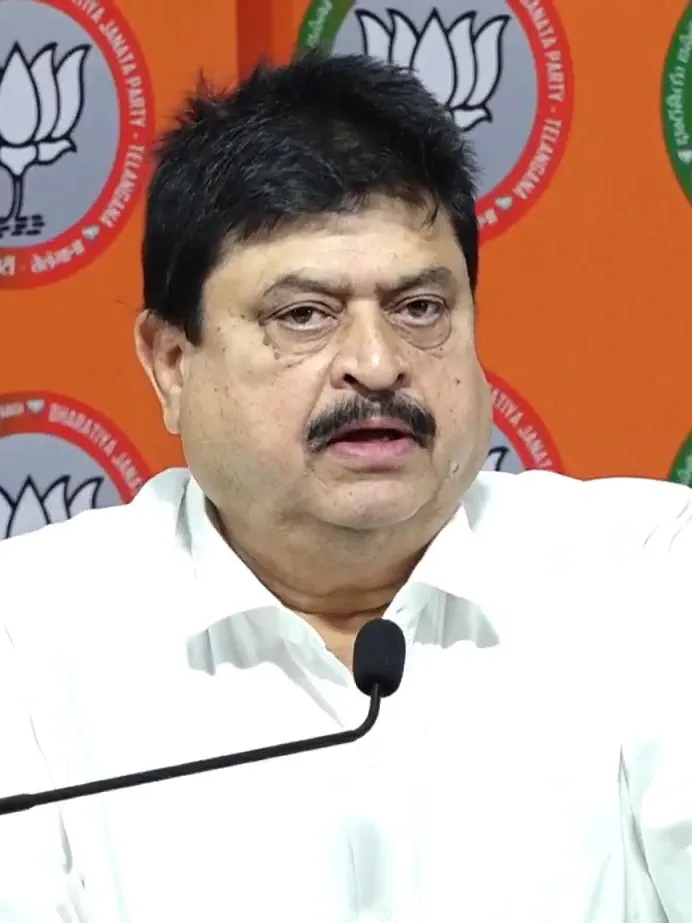
These protests serve a dual purpose. They keep the BJP visible on livelihood concerns that affect large sections of the population, and they allow the party to contrast its activism with what it portrays as the BRS’s reduced capacity to mount sustained pressure. Recent Assembly disruptions and cases filed against certain BRS legislators have further reinforced the BJP’s narrative that an opening exists for a more consistent Opposition voice.
Historical Narrative and Contemporary Politics
The Liberation Day campaign is not new for the BJP in the region; the party has raised the issue for decades. What has changed is the political context. With the BRS weakened and the Congress focused on consolidating power after its 2023 victory, the BJP sees an opportunity to link a historical narrative of national integration with contemporary accusations of vote-bank politics and governance shortfalls.
Union Minister Bandi Sanjay Kumar has stated that once the BJP comes to power in the state, September 17 will be observed as an official state function and the relevant history will be taught in schools. Similar commitments have been voiced by other senior leaders. The messaging seeks to appeal both to those who view the 1948 events as a foundational moment of Telangana’s modern identity and to voters looking for a clear alternative to the two larger state parties.
At the same time, the BJP is careful to frame its events as commemorative rather than purely partisan, emphasising tributes to those who resisted the Razakars and the role of Sardar Vallabhbhai Patel. Parallel outreach, including women’s rallies and plans for a month-long service campaign coinciding with the period, aims to broaden the party’s visible presence on the ground.
Challenges and Political Arithmetic
Occupying the Opposition space is not automatic. The BRS still retains organisational networks and a core support base built over years in power, and its leaders continue to criticise the Congress government on multiple fronts. The Congress, as the ruling party, controls the administrative machinery and can shape the official response to demands for recognition of Liberation Day. The BJP’s limited legislative numbers also constrain its ability to force debates inside the Assembly.
Nevertheless, consistent street-level activity on fee reimbursement, farmers’ concerns and the Liberation Day issue allows the party to claim that it is raising matters the other two parties prefer to avoid or handle differently. By tying a cultural-historical demand to everyday economic grievances, the BJP is attempting to build a broader narrative of neglect—neglect of history on one hand and of students and farmers on the other.
Looking Ahead
The intensity of the September 17 programmes and the accompanying protests will test how effectively the BJP can convert visibility into lasting political traction. If the party succeeds in keeping Liberation Day in public conversation and maintains pressure on livelihood issues, it may gradually expand its claim to be the primary Opposition force. Much will depend on whether the BRS can re-energise itself and whether the Congress government addresses the specific grievances being highlighted.
For now, the BJP’s dual strategy is clear: use the symbolism of September 17 to assert a distinctive historical and nationalist position, while using protests over fee reimbursement and farmers’ insurance to demonstrate day-to-day relevance. In a state where the traditional Opposition is in flux, that combination represents a calculated effort to turn organisational weakness in one party into an opening for another. The coming months will show whether the pitch resonates beyond the commemorative events themselves.
Read more – pokerslive.com