
Financial stability represents more than steady employment—it requires diversified revenue sources that provide security against economic shifts and personal circumstances. Building multiple income streams legally offers protection, accelerates wealth accumulation, and creates opportunities for greater freedom. This comprehensive guide explores practical strategies for developing additional revenue channels while maintaining ethical and legal standards.
Understanding the Importance of Multiple Income Streams
Reliance on single income sources creates vulnerability. Job loss, industry changes, or health issues can quickly destabilize finances when all revenue depends on one employer. Diversified income provides buffers during challenging periods and accelerates progress toward financial goals like debt reduction, retirement savings, or major purchases.
Multiple streams also enable lifestyle flexibility. Different income types complement each other—active earnings from consulting might fund passive investments in real estate or digital products. This balance reduces stress and creates psychological security that benefits overall well-being. Many successful individuals attribute long-term stability to intentional income diversification rather than exceptionally high earnings from single sources.
Legal compliance remains essential throughout diversification efforts. Understanding tax implications, business registration requirements, and industry regulations prevents costly mistakes. Consulting professionals when necessary ensures all activities remain above board while maximizing benefits.
Step 1: Assessing Your Current Financial Situation and Skills
Begin by evaluating existing income, expenses, assets, and liabilities. Create detailed financial statements revealing cash flow patterns and potential capacity for additional revenue generation. Identify skills, knowledge, and resources that could translate into marketable offerings.
Consider time availability and energy levels realistically. Overcommitting leads to burnout and diminished quality across all activities. Start with income streams that leverage existing strengths rather than requiring entirely new skill development. This approach minimizes learning curves and accelerates initial results.
Personal interests often reveal promising opportunities. Passion projects frequently evolve into profitable ventures when approached strategically. However, balance enthusiasm with market demand research to ensure viability before significant investment.
Step 2: Developing Active Side Income Opportunities
Active income requires direct effort but often generates quicker returns than passive alternatives. Freelancing allows professionals to monetize specialized skills through platforms connecting them with clients worldwide. Writing, graphic design, programming, consulting, and virtual assistance represent common areas with strong demand.
Tutoring or teaching leverages subject expertise for supplemental earnings. Online platforms enable reaching students globally while traditional local opportunities serve community needs. Content creation through blogging, YouTube channels, or podcasting builds audiences that can eventually support monetization through various channels.
Service-based businesses like pet sitting, lawn care, or event planning require minimal startup costs while utilizing local networks. These ventures often scale through referrals and reputation building. Delivery or rideshare services provide flexible earning opportunities that fit around primary employment schedules.
Step 3: Creating Passive Income Streams
Passive income generates revenue with minimal ongoing effort after initial setup. Dividend-paying investments provide regular income from stock portfolios. Real estate investments through rental properties or real estate investment trusts create ongoing cash flow while potentially appreciating in value over time.
Digital products represent excellent passive opportunities. E-books, online courses, printables, or stock photography require upfront creation but can generate sales indefinitely. Software applications or mobile tools follow similar patterns once developed and launched successfully.
Affiliate marketing promotes products or services through content while earning commissions on resulting sales. Successful implementation requires building trust with audiences through valuable information rather than constant selling. Blogging or social media channels often serve as vehicles for this approach.
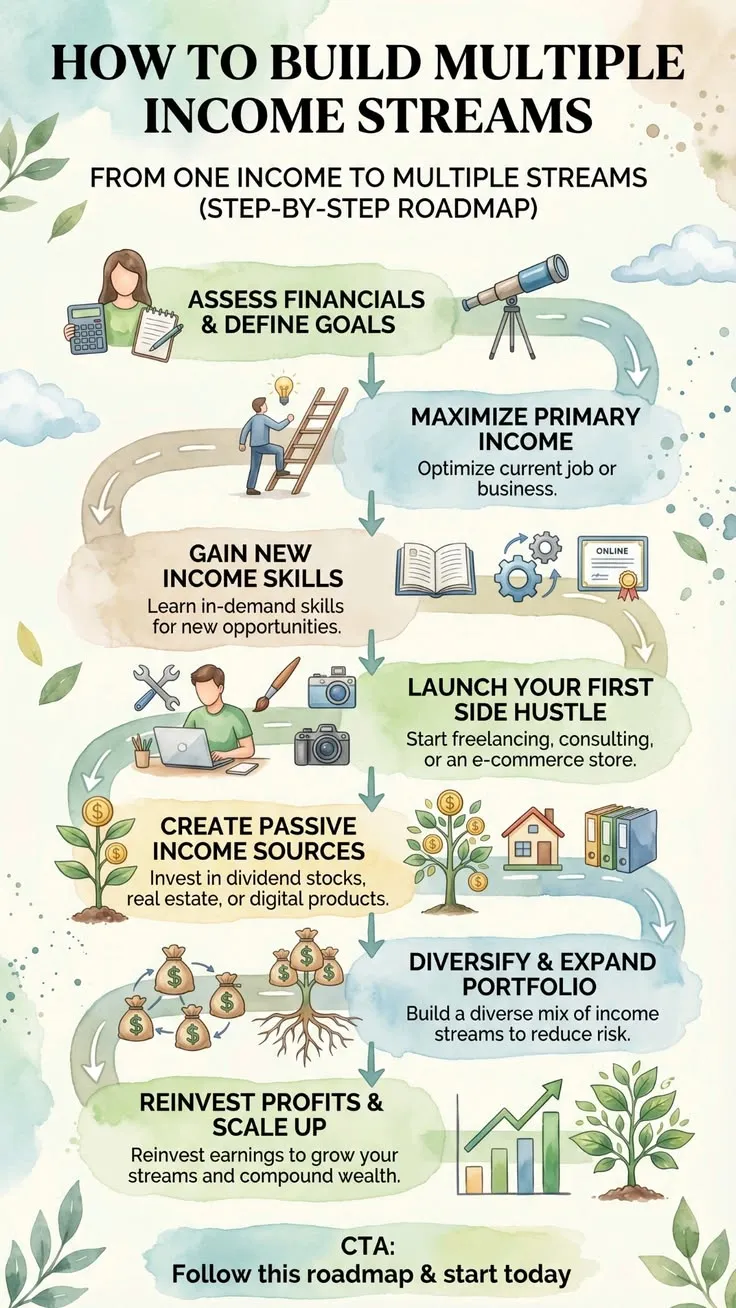
Step 4: Investing for Long-Term Income Generation
Strategic investing builds wealth that eventually produces its own income streams. Retirement accounts offer tax advantages and potential employer matching that accelerate growth. Diversified portfolios balancing stocks, bonds, and other assets manage risk while pursuing reasonable returns.
Education about investing principles prevents costly mistakes. Understanding compound interest, asset allocation, and long-term market behavior helps maintain discipline during volatility periods. Many successful investors start with low-cost index funds providing broad market exposure without requiring extensive research.
Real estate investment, whether direct property ownership or through funds, historically provides both appreciation and income generation. Careful analysis of local markets, property conditions, and management requirements helps ensure positive cash flow and manageable involvement levels.
Step 5: Legal and Tax Considerations for Multiple Streams
Proper business structure protects personal assets and optimizes tax situations. Sole proprietorships offer simplicity for small operations while limited liability companies provide greater protection as activities expand. Consulting tax professionals helps navigate deductions, credits, and reporting requirements specific to multiple income sources.
Record keeping becomes crucial when managing various revenue streams. Separate business accounts and meticulous documentation simplify tax preparation and demonstrate compliance during potential audits. Understanding self-employment tax obligations prevents unpleasant surprises during filing seasons.
Intellectual property protection through copyrights or trademarks safeguards original creations generating income. Contracts with clients or partners clarify expectations and protect interests in collaborative ventures. Staying informed about regulatory changes affecting side businesses or investments maintains legal compliance as activities evolve.
Step 6: Managing Time and Avoiding Burnout
Multiple income streams require careful time allocation to prevent exhaustion. Prioritize activities based on return on investment of time and energy. Automate or delegate tasks where possible to maintain sustainability. Regular assessment helps identify which streams provide the best balance of income and effort.
Schedule dedicated time for each income source while protecting personal time for rest and relationships. Setting boundaries prevents work from consuming all available hours. Regular reviews of all activities ensure alignment with overall life goals and financial objectives.
Scaling successful streams gradually rather than adding new ones constantly maintains quality and prevents overwhelm. Focus on optimizing existing revenue channels before expanding further. This measured approach builds stability while allowing for sustainable growth.
Measuring Success and Making Adjustments
Track key metrics across all income streams to evaluate performance objectively. Revenue, expenses, time investment, and overall satisfaction provide comprehensive views of effectiveness. Regular reviews help identify areas needing attention or adjustment.
Market conditions, personal circumstances, and goals change over time. Flexibility allows adaptation while maintaining core financial stability. Some streams may naturally diminish while others grow, requiring periodic rebalancing of efforts and resources.
Celebrate milestones and progress to maintain motivation throughout the journey. Building multiple income streams represents a marathon rather than sprint, with consistent effort yielding substantial results over years rather than months.
The Path to Financial Stability and Freedom
Multiple legal income streams create resilience against economic uncertainty while accelerating progress toward financial goals. The combination of active efforts, passive investments, and strategic planning builds comprehensive security that single income sources cannot provide.
Success requires patience, continuous learning, and willingness to adapt strategies as circumstances evolve. Starting small and building gradually prevents overwhelm while establishing sustainable habits. The freedom and security that come from diversified income make the effort worthwhile for those committed to long-term financial well-being.
Begin assessing your skills and opportunities today. Choose one additional income stream to develop while maintaining primary employment stability. Consistent action over time transforms financial situations and opens doors to greater possibilities. Financial stability represents achievable reality for those willing to invest time and effort in building multiple legal revenue channels.
Read more – amherstdelivery.com