
Building a positive mindset is one of the most powerful ways to improve personal growth, emotional well-being, and overall quality of life. A positive mindset does not mean ignoring problems or pretending that challenges do not exist. Instead, it means developing a healthier way of thinking that helps you handle difficulties, learn from experiences, and focus on opportunities.
The way people think influences their actions, decisions, relationships, and ability to achieve goals. When individuals develop positive thinking habits, they become better prepared to manage stress, overcome obstacles, and create meaningful changes in their daily lives.
In today’s fast-paced world, maintaining a positive mindset can help people build confidence, improve productivity, and develop a stronger sense of purpose. By practicing simple mental habits and making conscious choices, anyone can gradually transform their thoughts and create a more balanced life.
What Is a Positive Mindset?
A positive mindset is a way of thinking that focuses on growth, solutions, possibilities, and learning from experiences. It involves approaching situations with optimism while remaining realistic about challenges.
A person with a positive mindset understands that difficulties are a natural part of life. Instead of feeling defeated by problems, they try to find lessons, solutions, and opportunities for improvement.
Positive thinking does not mean that negative emotions should be ignored. Everyone experiences fear, disappointment, stress, and frustration. A positive mindset helps individuals manage these emotions effectively and respond to situations in a healthier way.
Why a Positive Mindset Is Important
A positive mindset can influence many areas of life, including mental health, relationships, career growth, and personal confidence.
People who develop positive thinking habits often become more resilient because they learn how to recover from setbacks. They are more likely to approach challenges with confidence and continue working toward their goals.
Positive thinking can also improve decision-making. When individuals focus on solutions instead of only problems, they are able to evaluate situations more clearly and take constructive actions.
A positive mindset creates a foundation for personal development by encouraging learning, adaptability, and continuous improvement.
Practice Gratitude Every Day
One of the simplest ways to build a positive mindset is by practicing gratitude. Gratitude involves recognizing and appreciating the good things in life, whether they are big achievements or small daily experiences.
Many people focus mainly on what is missing or what is going wrong. Practicing gratitude shifts attention toward positive aspects and helps develop a more balanced perspective.
Keeping a gratitude journal, appreciating supportive people, or taking a few moments each day to reflect on positive experiences can improve emotional well-being.
Regular gratitude practice trains the mind to notice opportunities and positive moments instead of focusing only on difficulties.
Focus on Positive Self-Talk
The way people talk to themselves has a strong impact on their confidence and mindset. Negative self-talk can reduce motivation and create unnecessary stress.
Positive self-talk involves replacing harmful thoughts with more supportive and realistic thinking. Instead of saying, “I cannot do this,” a positive approach focuses on learning and improvement by thinking, “I can improve with practice.”
Developing encouraging inner conversations helps build confidence and creates a stronger belief in personal abilities.
Develop a Growth Mindset
A growth mindset is the belief that abilities and skills can improve through effort, learning, and experience. Instead of seeing mistakes as failures, people with a growth mindset view them as opportunities to learn.
This approach encourages curiosity, persistence, and continuous improvement. Challenges become chances to develop new skills rather than reasons to give up.
Developing a growth mindset helps individuals become more adaptable and confident when facing changes or difficult situations.
Surround Yourself With Positive Influences
The people and environment around you can strongly affect your thoughts and emotions. Positive relationships can encourage confidence, motivation, and personal growth.
Spending time with supportive and inspiring people can help create a healthier mindset. Positive influences may include friends, family members, mentors, or communities that encourage improvement.
It is also important to be mindful of negative influences, including constant negativity, unhealthy comparisons, and environments that reduce confidence.
Creating a positive environment supports better emotional and mental habits.
Set Realistic Goals
Having clear goals provides direction and motivation. When people set realistic goals, they create a sense of progress and achievement.
Large goals can sometimes feel overwhelming, but breaking them into smaller steps makes them easier to manage.
Celebrating small achievements builds confidence and encourages continued effort. Goal-setting also helps individuals focus their energy on meaningful activities rather than unnecessary worries.
A positive mindset grows when people recognize their progress and continue moving forward.
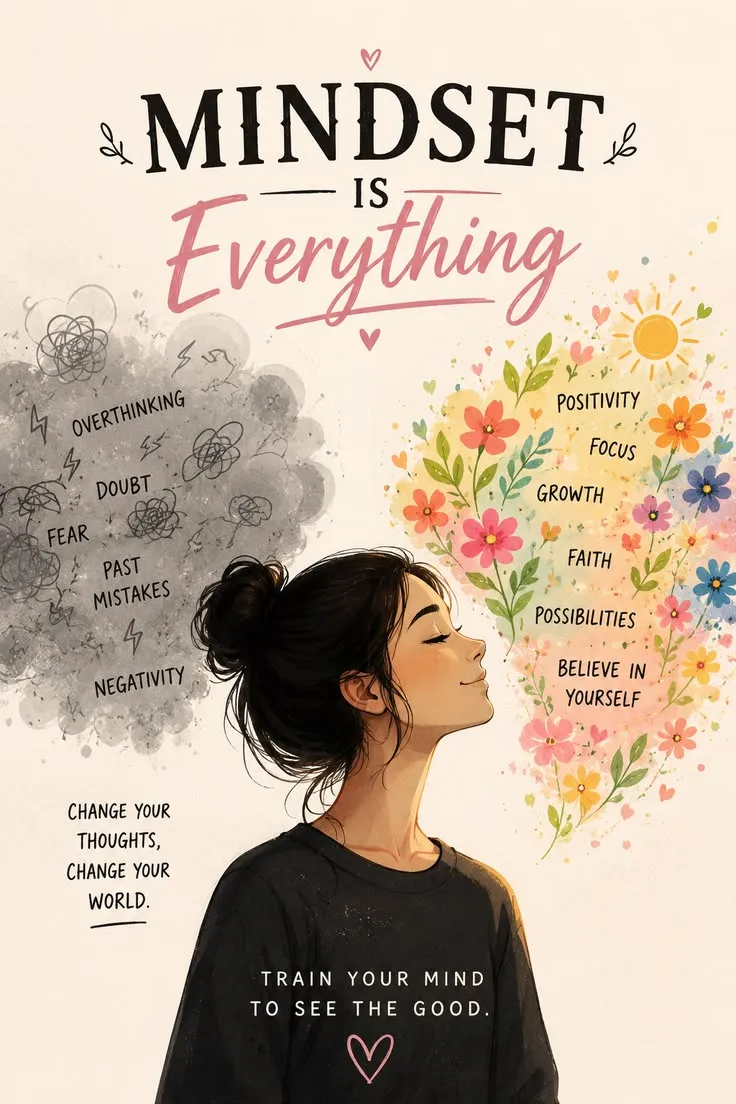
Learn to Manage Negative Thoughts
Negative thoughts are a normal part of life, but allowing them to control emotions can affect confidence and happiness.
Learning to manage negative thinking involves recognizing unhelpful thoughts and replacing them with more balanced perspectives.
Mindfulness, reflection, and problem-solving techniques can help individuals understand their thoughts without being controlled by them.
Instead of focusing only on problems, positive thinking encourages looking for possible solutions and lessons.
Take Care of Your Physical Health
Mental and physical health are closely connected. A healthy lifestyle can support a stronger and more positive mindset.
Regular physical activity, balanced nutrition, proper sleep, and relaxation practices can improve energy levels and emotional balance.
When the body feels healthier, individuals often experience better focus, motivation, and confidence.
Simple daily habits such as walking, staying hydrated, and maintaining a regular routine can contribute to overall well-being.
Practice Mindfulness and Stay Present
Mindfulness involves paying attention to the present moment without excessive judgment. It helps individuals reduce stress and become more aware of their thoughts and emotions.
Many people spend too much time worrying about the future or regretting the past. Mindfulness encourages focusing on what can be controlled in the present.
Practices such as meditation, deep breathing, and mindful activities can help create a calmer and more focused mind.
Learn From Challenges and Failures
Challenges and failures are unavoidable parts of life. A positive mindset does not eliminate difficulties but changes how people respond to them.
Instead of viewing failure as a permanent setback, it can be seen as a learning experience. Every challenge can provide valuable lessons and opportunities for improvement.
People who learn from mistakes become more resilient and better prepared for future challenges.
Limit Comparisons With Others
Comparing yourself constantly with others can negatively affect confidence and happiness. Everyone has different experiences, goals, and timelines.
A positive mindset focuses on personal progress rather than competing with others.
Instead of asking why someone else is ahead, focus on your own improvement and celebrate your unique journey.
Personal growth becomes easier when attention is placed on individual goals and achievements.
Create Positive Daily Habits
Small daily habits can create significant changes over time. Building a positive mindset requires consistent practice and commitment.
Simple habits such as reading inspiring content, maintaining a healthy routine, expressing gratitude, learning new skills, and spending time on meaningful activities can improve overall thinking patterns.
Consistency is more important than perfection. Small improvements every day can lead to major personal transformation.
Frequently Asked Questions (FAQs)
Can anyone develop a positive mindset?
Yes, anyone can develop a positive mindset by practicing healthier thinking habits, managing negative thoughts, and focusing on personal growth.
Does positive thinking mean ignoring problems?
No, positive thinking does not mean ignoring problems. It means facing challenges with a solution-focused and balanced approach.
How long does it take to build a positive mindset?
Building a positive mindset is a continuous process. With regular practice, people can gradually develop healthier thought patterns and emotional habits.
Conclusion
Building a positive mindset is a powerful step toward transforming daily life. It helps individuals handle challenges, improve confidence, strengthen relationships, and create a more meaningful lifestyle.
Positive thinking is not about avoiding difficulties but about developing the ability to face them with courage and optimism. Through gratitude, self-awareness, healthy habits, and continuous learning, anyone can improve their mindset over time.
A positive mindset is created through small daily choices. By changing the way you think, you can change the way you experience life and create a stronger foundation for personal growth and success.