
A capsule wardrobe offers a practical and stylish solution for anyone who wants greater variety without the clutter of an overflowing closet. It is a carefully curated collection of versatile clothing pieces, usually ranging from about 25 to 40 items for a single season, that mix and match easily to produce many different outfits. The emphasis is not on owning the absolute minimum number of clothes but on making intentional choices so that nearly every garment works well with the others. This system reduces decision fatigue each morning, simplifies shopping decisions, and ensures that the pieces in the wardrobe receive regular wear rather than sitting unused.
The power of a capsule lies in cohesion and versatility. When colors coordinate and silhouettes complement one another, a limited number of garments can generate dozens or even more than a hundred distinct looks. Success depends on aligning the wardrobe with actual daily routines rather than idealized versions of life.
Understanding the Core Principles of a Capsule Wardrobe
Building an effective capsule starts with a clear-eyed assessment of real habits and needs. Observing what is actually worn over the course of one or two typical weeks reveals patterns in lifestyle, preferred styles, and genuine requirements. Days spent in an office, working remotely, running errands, or attending social events each demand different levels of formality and practicality. Anchoring the wardrobe in these everyday realities prevents the accumulation of pieces that look appealing in theory but rarely leave the hanger.
Decluttering is the next essential step. Sorting existing clothes into groups of items that are worn and loved, pieces kept but seldom used, and those that no longer fit or feel right creates immediate clarity. A useful filter asks whether a garment has been worn in the recent past and whether it is likely to be worn in the near future. Items that fail both tests can be set aside. The objective is greater visibility and usefulness rather than emptiness for its own sake.
Selecting a Cohesive Color Palette
Color coordination forms the foundation that makes mixing and matching effortless. A reliable approach begins with three to four foundation neutrals such as black, white, navy, grey, beige, cream, or camel, then adds one or two accent colors that complement the neutrals and suit personal taste. Neutrals make up the majority of the wardrobe and pair reliably with one another, while accents introduce personality without restricting combinations.
When the overall palette remains tight and harmonious, almost any top pairs successfully with almost any bottom. This multiplies outfit possibilities dramatically. Patterns or brighter shades can still appear, but they work best as occasional accents rather than dominant elements that limit pairing options.
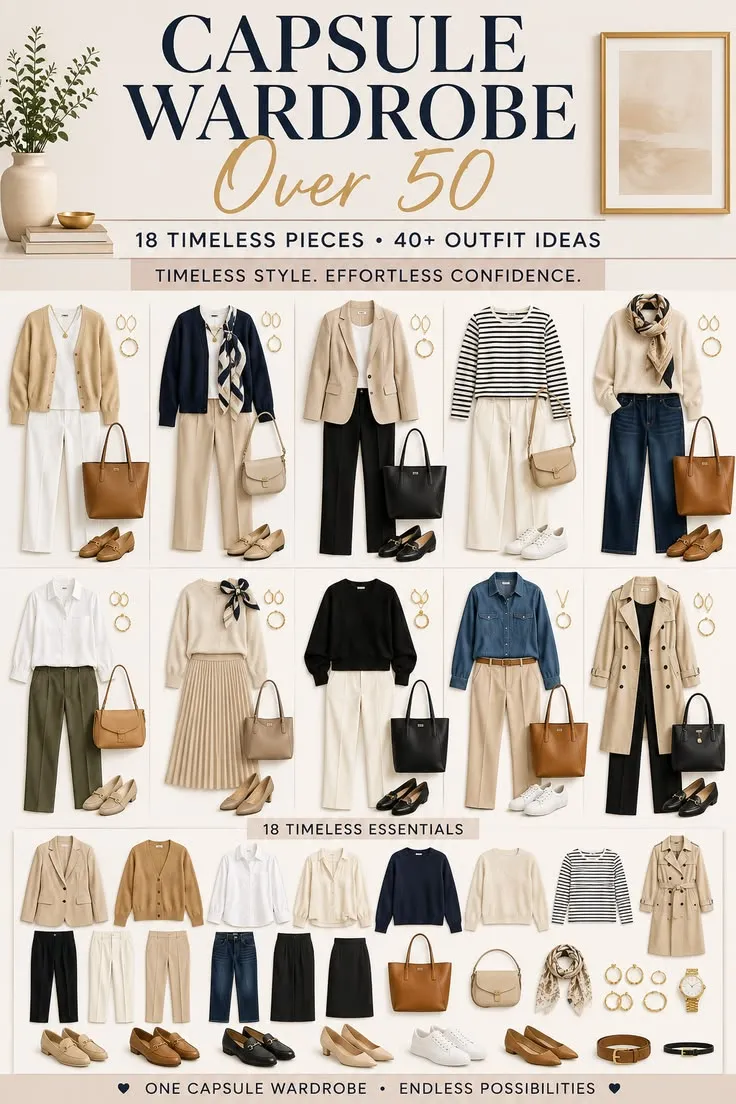
Choosing Versatile Core Pieces
A typical seasonal capsule includes roughly eight to twelve tops, four to six bottoms, three to six layers or outerwear pieces, three to five pairs of shoes, and optional dresses or accessories. Exact numbers flex according to climate, how often laundry is done, and the variety of daily activities. Someone with a more varied schedule or colder weather may need additional layers, while a simpler routine supports a leaner collection.
Core pieces usually center on reliable tops such as basic tees, a classic white button-down or blouse, and straightforward long-sleeve options. Bottoms benefit from variety in silhouette, for example pairing dark jeans with tailored trousers or a versatile skirt. Layers such as a blazer, cardigan, sweater, or denim jacket allow outfits to adapt across different levels of formality and temperature. Shoes should cover both casual and slightly dressier needs, commonly including sneakers, loafers, or boots. Every item earns its place by pairing with multiple others and suiting more than one type of day. Quality construction and good fit matter more than sheer quantity, as timeless shapes and durable fabrics support longer wear and reduce the need for frequent replacements.
Developing Outfit Formulas for Everyday Ease
A successful capsule functions less as a collection of separate garments and more as a system of ready-to-wear outfits. Establishing a handful of simple, repeatable formulas turns daily dressing into an automatic process. Everyday casual looks might combine a tee or knit top with jeans and sneakers, optionally finished with a denim jacket. Elevated casual combinations often feature a sweater or blouse with trousers and loafers. Work-ready formulas typically pair a button-down or blouse under a blazer with tailored bottoms and flats. Weekend options can center on a sweater or casual top with chinos or jeans and boots.
Because the colors coordinate, multiplying the number of tops by the number of bottoms already produces a wide range of base looks. Adding layers multiplies those options further. Accessories such as a scarf, belt, or simple jewelry can shift the overall feel of an outfit without expanding the core collection. Testing combinations in advance confirms that the pieces deliver enough practical variety for real weeks of wear.
Practical Steps to Build and Maintain the System
The most effective way to begin is by shopping the existing closet first. Strong pieces that already fit the chosen palette and lifestyle become the foundation, while genuine gaps become clear. Only after this assessment should any new purchases be considered, and those additions should address specific missing functions rather than respond to temporary trends.
Once the core set is assembled, wearing only those pieces for a trial period reveals what works well and what still feels incomplete. Adjustments can then be made gradually. Seasonal refreshes keep the wardrobe relevant by rotating heavier layers into colder months or lighter fabrics into warmer ones while preserving the overall structure of the system.
Ongoing maintenance involves periodic review. As lifestyle needs or preferences evolve, pieces can be swapped thoughtfully so that the collection remains aligned with daily life. The guiding principle stays the same: every addition should enhance the ability to mix and match rather than simply increase the total number of items.
Broader Benefits of a Streamlined Wardrobe
Beyond the practical convenience of getting dressed more quickly, a well-built capsule reduces the mental load of daily decisions and encourages more deliberate consumption. Many people find that limiting impulse purchases leads to meaningful savings over time. Closets feel more organized, and individual garments receive more frequent use. Confidence often increases as well, because the clothes consistently appear polished and coordinated.
The approach adapts readily across different lifestyles, body types, and climates. Whether the primary focus is professional settings, casual days, or a blend of both, the underlying principles of color cohesion, versatile silhouettes, and honest alignment with real routines remain consistent and effective.
Making the Capsule Personal and Sustainable
There is no universal correct number of pieces or fixed list of must-have items. The most successful capsules reflect individual needs, climate conditions, and aesthetic preferences. Some people thrive with a tighter set of around thirty items, while others prefer a slightly broader seasonal collection. What matters most is that the clothes support daily life without excess or frustration.
By prioritizing mixable colors, adaptable shapes, and garments that have already proven their usefulness, a smaller wardrobe can deliver greater style flexibility than a crowded one. Getting dressed becomes faster and more enjoyable, and the closet shifts from a source of overwhelm into a reliable, well-functioning resource. With careful selection and occasional refinement, fewer clothes genuinely produce more stylish and wearable outfits for every kind of day.
Read more – flowofnames.com