
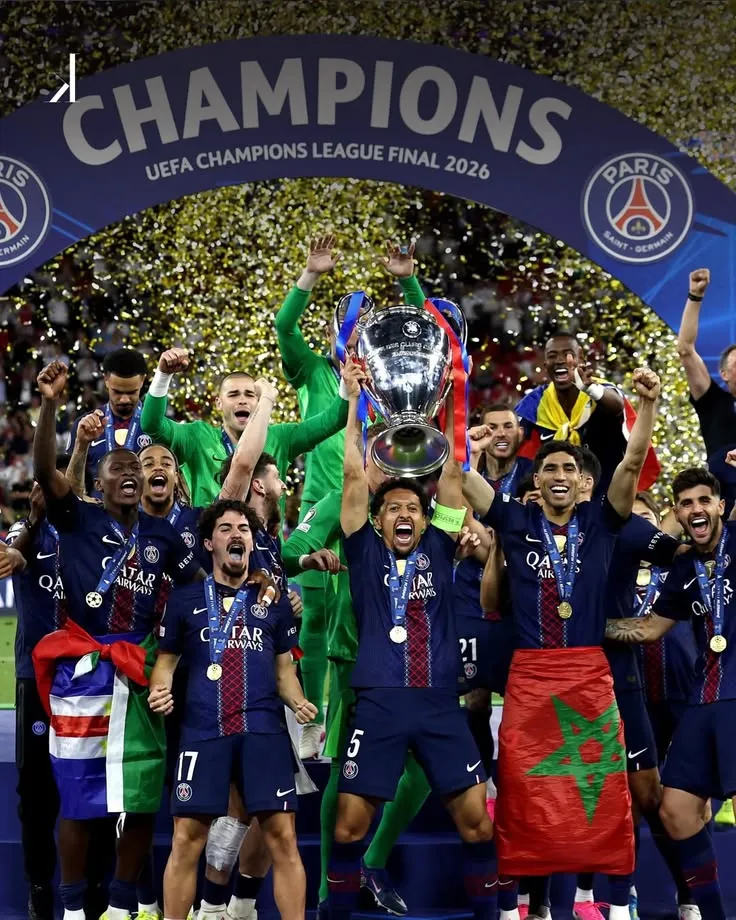
Paris Saint-Germain stand at a rare crossroads in European football. After securing back-to-back UEFA Champions League titles in 2025 and 2026, the French champions have joined an exclusive group. Only Real Madrid had previously achieved consecutive victories in the Champions League era. Now the question is whether PSG can push further and become the first side since Madrid’s three-peat between 2016 and 2018 to win the competition three times in succession. At the same time, the club must confront a classic sporting dilemma: does continuity and stability eventually breed complacency, or does it provide the foundation for lasting dominance?
A Historic Achievement Already Secured
PSG’s 2026 final victory over Arsenal, decided on penalties after a 1-1 draw in Budapest, confirmed their status as one of the continent’s elite. The triumph followed a dominant 5-0 win over Inter Milan in the previous year’s final. These successes marked a clear evolution under manager Luis Enrique. The team moved away from reliance on individual superstars toward a more cohesive, high-intensity collective. Young talents such as Désiré Doué and João Neves have matured into key contributors, while established figures like Ousmane Dembélé and Khvicha Kvaratskhelia have delivered consistent excellence.
The back-to-back titles place PSG among a small number of clubs to retain the European Cup or Champions League. Historically, successive victories remain rare. Real Madrid’s three consecutive titles in the late 2010s set a modern benchmark that no other side has matched. PSG’s ability to defend their crown demonstrated mental resilience and tactical adaptability, qualities that will be tested again as they chase a third successive triumph.
The Challenge of Sustaining Excellence
Continuity can be both a strength and a risk. Luis Enrique has instilled a clear identity based on pressing, positional fluidity, and attacking intensity. The squad’s average age remains relatively low, offering a blend of experience and hunger. Many of the players who lifted the trophy in 2026 are still in their early or mid-twenties, reducing the immediate threat of physical decline. Yet the demands of a long season that includes domestic competitions, the Champions League, and additional international fixtures can accumulate. Fatigue and the psychological weight of expectation often surface when a team has already achieved what once seemed distant.
History shows that even the strongest sides eventually face challenges to their supremacy. Real Madrid’s three-peat was followed by periods of adjustment. Other dominant teams have found that familiarity can dull the edge that once set them apart. PSG must therefore balance the benefits of an established core with the need for fresh impetus. The club’s ownership resources provide an advantage few rivals can match, allowing strategic reinforcements without the pressure of fire sales or forced rebuilds.
New Arrivals Aim to Maintain Momentum
The summer transfer window has already brought significant additions designed to refresh the attacking options. Ferran Torres arrived from Barcelona after a strong season and a pivotal role in Spain’s World Cup success, where he scored the decisive goal against Argentina. His versatility across the forward line and familiarity with Luis Enrique’s methods from previous national team work make him a natural fit. The Spaniard brings proven big-game experience and the ability to operate as a central striker or wide forward.
Mika Godts, signed from Ajax, offers pace, dribbling ability, and goal threat from wide areas. The young Belgian performed impressively in the Eredivisie and represents a long-term investment in dynamic attacking talent. Maghnes Akliouche joined from Monaco, adding creativity and technical quality in midfield or advanced positions. These signings address potential departures and the need for rotation while preserving the squad’s youthful profile. Lucas Digne’s return further strengthens defensive depth.
Together, the new arrivals inject competition and variety without dismantling the existing structure. They provide options that can prevent the side from becoming predictable. Whether these players integrate quickly enough to make an immediate impact in the Champions League will form one of the key storylines of the season.
The Path to a Three-Peat
Winning three consecutive Champions League titles would elevate PSG into rare territory. Real Madrid remain the only club to have achieved a three-peat in the Champions League era, and only a handful of sides have managed successive European Cups across the competition’s longer history. The French champions possess the squad quality, managerial expertise, and financial stability to make a serious challenge. Their domestic dominance in Ligue 1 continues to provide a platform of confidence and regular match rhythm.
Yet the European landscape remains highly competitive. Established powers and rising challengers will study PSG’s patterns closely. Maintaining the intensity that defined the previous two campaigns requires constant evolution. Luis Enrique has shown a willingness to adapt tactics and personnel. The club’s recruitment strategy appears focused on complementary profiles rather than disruptive overhauls, suggesting a deliberate preference for measured continuity.
Balancing Stability and Renewal
The central tension for PSG is whether the same core that delivered two titles can sustain the hunger required for a third. Continuity offers tactical familiarity, strong dressing-room relationships, and institutional knowledge of what it takes to succeed in the latter stages of the competition. Stability can also risk stagnation if players or staff grow too comfortable. The addition of Torres, Godts, and Akliouche represents an attempt to tip the balance toward renewal while protecting the foundations already built.
Success will depend on more than individual talent. Squad management across a congested calendar, injury prevention, and the ability to raise performance levels in decisive knockout ties will prove critical. Mental freshness may matter as much as physical condition. The players who have already tasted consecutive triumphs must demonstrate that the desire for further glory remains undiminished.
Looking Ahead
Paris Saint-Germain have transformed from perennial contenders into proven champions. Their back-to-back Champions League victories established a new standard for the club and raised expectations accordingly. The pursuit of a third successive title will test every aspect of the project Luis Enrique has constructed. The new signings provide tools to keep the side evolving, yet the ultimate responsibility rests with the collective ability to maintain standards under increased scrutiny.
Whether continuity becomes a platform for sustained excellence or a source of gradual decline will unfold over the coming season. For now, PSG possess the ingredients—talent, resources, coaching, and recent success—to chase a historic three-peat. Few clubs in the modern era have stood in this position. How they respond will define the next chapter of their European story.
Read more – Thepowerfuldua.com , yandex-games.org