
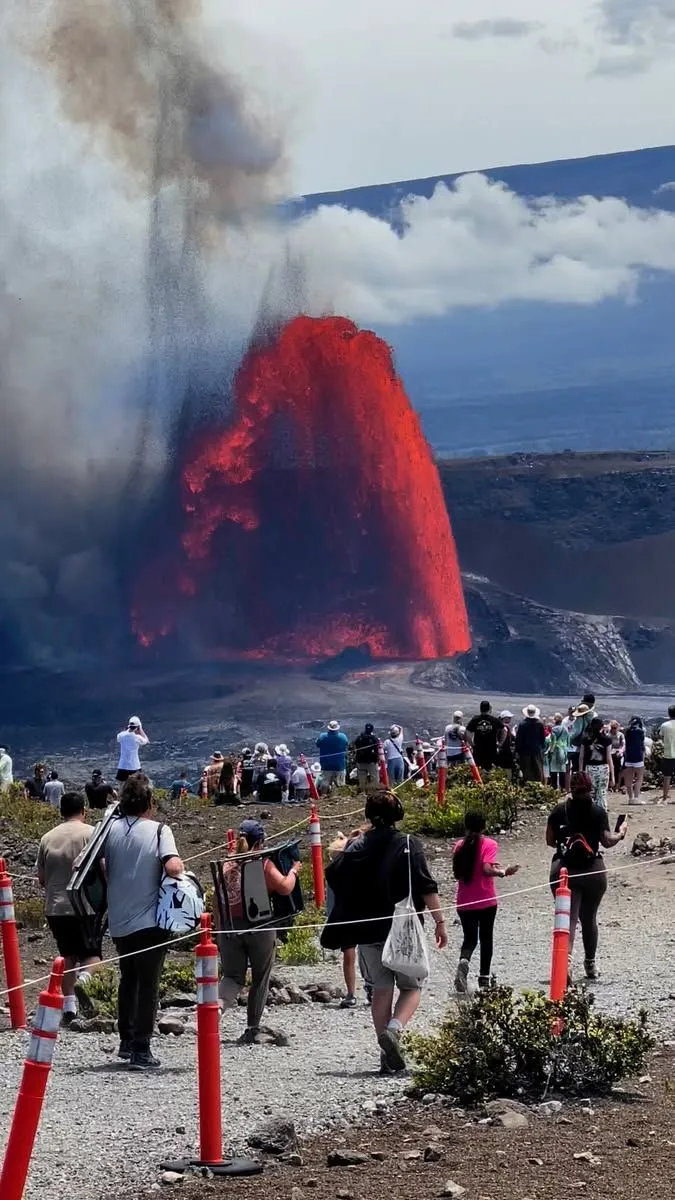
Lava fountains soaring hundreds of feet into the darkness transformed the summit of Kilauea into a vivid display of Earth’s internal energy on the morning of October 17, 2026. Episode 55 of the volcano’s ongoing summit eruption sent molten rock shooting from a vent inside Halemaumau crater, reaching heights of approximately 720 feet and illuminating the night sky over Hawaii Volcanoes National Park. The event offered scientists valuable observations while underscoring the persistent volcanic hazards associated with active vents.
According to the U.S. Geological Survey’s Hawaiian Volcano Observatory, the episode began at 3:19 a.m. Hawaii Standard Time at the north vent within Halemaumau crater. Continuous overflows from the vents had been underway the previous day, transitioning into sustained fountaining in the early hours. By around 5:00 a.m., the lava fountain from the north vent climbed to just over 700 feet, with reports placing the peak near 720 feet above the vent. An eruptive plume rose to approximately 25,000 feet above sea level, carrying volcanic gases and particles high into the atmosphere.
A Continuing Pattern of Summit Activity
This marked the 55th lava-fountaining episode in the summit caldera eruption that began on December 23, 2024. The previous high-fountaining episode had occurred on August 25, 2026. In the intervening weeks, the volcano produced intermittent spatter, low-dome fountains and lava flows from the eruptive vent complex, building pressure that eventually culminated in the renewed high fountaining. All eruptive vents and lava flows remained confined to Halemaumau crater inside the national park boundaries, limiting direct threats to surrounding communities while still generating significant local hazards.
The fountaining lasted nearly six hours. Activity ended abruptly at 9:03 a.m. on October 17. During the episode, lava flows spread across portions of the crater floor, covering an estimated 30 to 40 percent of the surface at one point. As the fountain heights declined later in the morning, the plume also decreased in elevation before the eruption ceased.
Scientific Insights from the Display
Each fountaining episode provides researchers with data on magma supply, gas content and the dynamics of the shallow summit reservoir. The height of the fountains reflects the pressure and gas expansion driving the magma upward. Measurements of fountain height, effusion rates and ground deformation help refine models of how magma moves beneath the summit and how the crater floor continues to fill over successive episodes. The abrupt end of Episode 55, followed by observations of summit reinflation, is consistent with patterns seen in earlier cycles in which magma recharge resumes after a period of vigorous eruption.
Visual and instrumental records captured during the night and early morning also document the interaction between the rising plume and atmospheric winds. Winds from the north-northeast directed volcanic gas emissions and tephra toward the south-southwest. Tephra fall was greatest within roughly three miles of the vents, while finer ash and delicate strands of volcanic glass known as Pele’s hair could remain suspended and travel farther distances.
Hazards Persist Near Active Vents
Even though the high fountaining concluded, hazards associated with the eruption remain. Fresh lava on the crater floor stays hot and may continue to move slowly in the days following an episode. Volcanic gases can produce vog, a form of volcanic smog that may affect air quality and respiratory health downwind. Airborne tephra and Pele’s hair can irritate skin and eyes. Park officials and scientists continue to advise the public to stay outside closed areas, monitor official updates and respect restrictions designed to protect visitors from these risks.
The Aviation Color Code and Volcano Alert Level are adjusted according to the level of activity. During the peak of Episode 55 the codes reflected elevated concern; after the fountaining ended they were lowered, while monitoring of gas emissions, ground deformation and seismicity continued.
A Dramatic yet Contained Spectacle
The images and video of 720-foot lava fountains rising against the night sky captured widespread attention. The spectacle illustrated both the power and the relatively contained nature of the current summit activity. Unlike some historical eruptions that sent lava flows beyond the caldera or into populated areas, the present sequence has remained focused within Halemaumau. This confinement allows detailed scientific observation while reducing the immediate threat to infrastructure and communities outside the park.
At the same time, the repeated cycles of fountaining and pause demonstrate that the magma system beneath Kilauea’s summit remains active and capable of producing dramatic surface displays with little warning. Weeks of lower-level activity can give way to high fountains within hours once conditions align.
Looking Ahead
Following the end of Episode 55, scientists noted ongoing summit reinflation, a signal that magma continues to accumulate in the shallow reservoir. Future episodes remain possible, though the timing of the next high-fountaining event cannot be predicted with precision. The Hawaiian Volcano Observatory maintains continuous monitoring through seismometers, tiltmeters, gas sensors, webcams and periodic fieldwork to track changes and provide timely information.
For those watching from a distance, the night-time fountains of Episode 55 offered a striking reminder of the geological processes continually reshaping the Island of Hawaii. For researchers, the event supplied another data point in the long-term record of the 2024–2026 summit eruption. And for park managers and residents, it reinforced the importance of remaining attentive to official guidance even when the most dramatic phase of an episode has passed.
Lava fountains reaching 720 feet above the crater floor stand as one of the more impressive expressions of Kilauea’s current activity. The combination of visual drama, scientific value and ongoing hazard awareness defines the latest chapter in the volcano’s restless summit eruption.
Read more – Lpainhand.com