
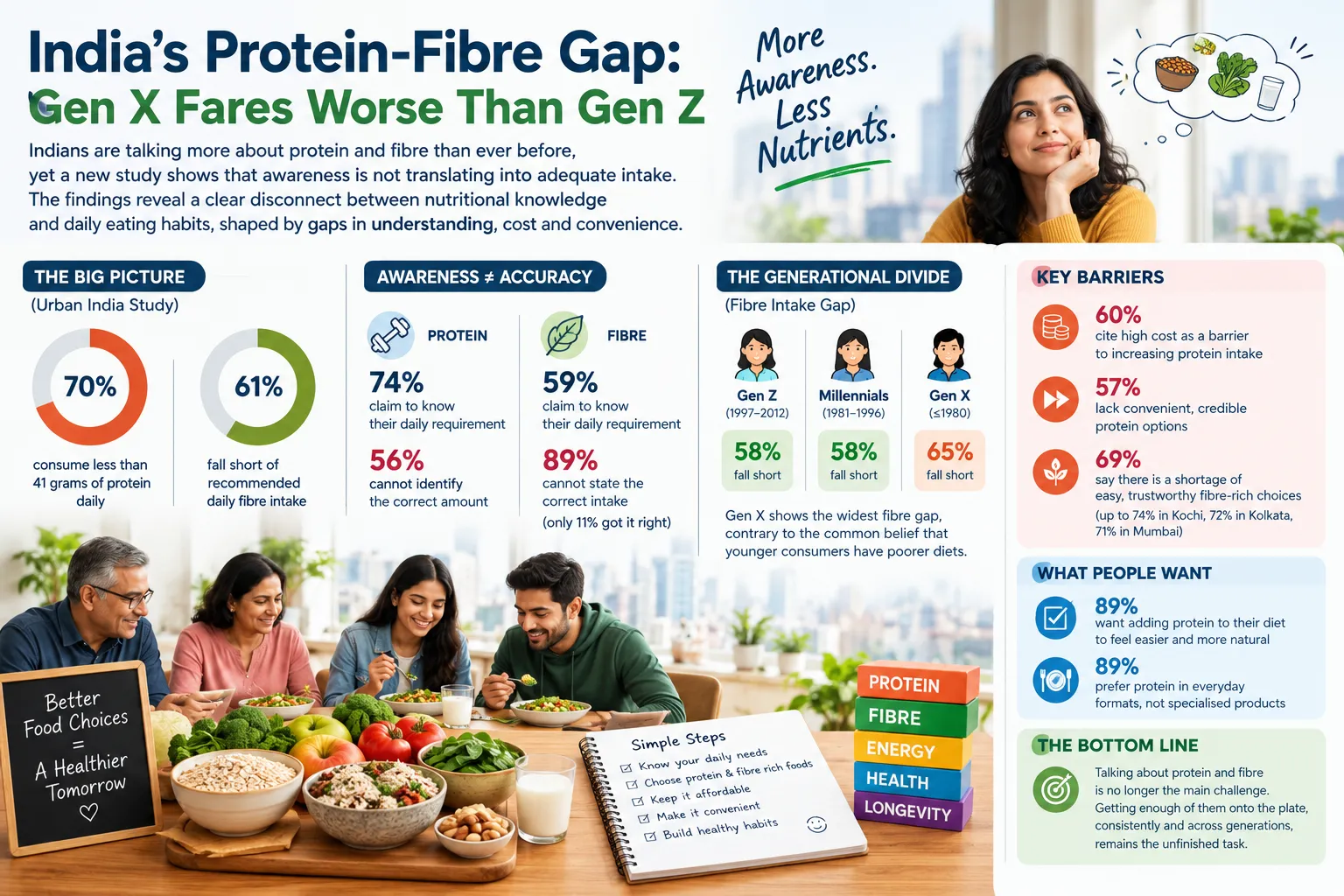
Indians are talking more about protein and fibre than ever before, yet a new study of urban consumers shows that awareness is not translating into adequate intake. Seven in ten respondents consume less than 41 grams of protein a day, and fibre intake falls short across age groups. The findings reveal a clear disconnect between nutritional knowledge and daily eating habits, shaped by gaps in understanding, cost and convenience.
The Study and Its Scope
The report, titled “The State of Protein & Fibre in Urban India,” was conducted by PepsiCo India in association with Euromonitor International and the Indian Council of Agricultural Research–Indian Institute of Millet Research. It surveyed 1,250 people aged 18 to 50 in five cities—Delhi, Mumbai, Bengaluru, Kolkata and Kochi. Researchers examined awareness of protein and fibre requirements, actual reported intake, breakfast habits, lifestyle factors and perceptions of everyday foods such as oats.
The results paint a consistent picture of shortfall. Seventy per cent of respondents reported consuming less than 41 grams of protein daily, a level well below common recommendations for adults. Fibre intake was similarly inadequate, with 61 per cent falling short of recommended daily amounts. These gaps appeared across all five cities surveyed.
Awareness Without Accuracy
One of the most striking findings is the gap between claimed awareness and accurate knowledge. Seventy-four per cent of respondents said they were aware of their daily protein requirement, yet 56 per cent could not correctly identify it. They were either unsure or misinformed about the actual number.
The discrepancy was even larger for fibre. Fifty-nine per cent claimed to know their daily fibre needs, but 89 per cent were unable to state the recommended intake accurately. Only 11 per cent got it right. Knowing that a nutrient is “important” does not automatically equip people to judge portion sizes or balance everyday meals.
The Generational Divide
The data also challenge assumptions about which age groups struggle most with nutrition. Gen X respondents—those born in or before 1980—showed the widest fibre gap. Sixty-five per cent of them consumed less than the recommended daily amount. Among Gen Z (born 1997–2012) and Millennials (born 1981–1996), the figure was lower at 58 per cent.
This pattern runs counter to the common view that younger consumers have poorer diets. In this urban sample, older working-age adults were more likely to fall short on fibre. Possible explanations include long-established eating patterns that are harder to change, time pressures, and less exposure to newer nutrition messaging that has reached younger cohorts through social media and fitness culture.
Protein shortfalls, by contrast, appeared broadly consistent across the cities and did not show the same sharp generational split in the reported figures.
Barriers of Cost and Convenience
Even when people understand the need for more protein and fibre, practical obstacles remain. Sixty per cent of respondents cited high cost as a barrier to increasing protein intake. Fifty-seven per cent pointed to a lack of convenient, credible protein-focused food options. For fibre, the convenience barrier was higher still: 69 per cent said there is a shortage of easy, trustworthy fibre-rich choices. The figure rose further in some cities, reaching 74 per cent in Kochi, 72 per cent in Kolkata and 71 per cent in Mumbai.
Consumers expressed a clear preference for solutions that fit existing routines. Around nine in ten said they wished adding protein to their diet felt easier and more natural. Eighty-nine per cent wanted protein available in familiar, everyday formats rather than specialised or clinical products. The desire is for nutrition that integrates into regular meals—breakfast, lunch and dinner—rather than requiring separate supplements or unfamiliar foods.
Implications for Daily Eating
The shortfalls have practical consequences. Inadequate protein can affect muscle maintenance, satiety, immunity and recovery, particularly for adults managing work, family and ageing. Low fibre intake is linked to digestive discomfort and longer-term risks related to gut health and chronic disease. When both nutrients are consistently under-consumed, the cumulative effect on energy, weight management and overall resilience can be significant.
Breakfast habits and the composition of staple meals appear especially relevant. Many urban diets remain heavy on refined carbohydrates while under-delivering on protein density and fibre-rich whole grains, pulses, vegetables and fruits. Without convenient, affordable options that raise the nutritional quality of familiar foods, awareness alone produces limited change.
What the Findings Suggest
The study does not claim that urban Indians lack interest in health. On the contrary, the high rates of claimed awareness show that nutrition has entered everyday conversation. The problem lies in the translation of that interest into accurate knowledge and practical eating patterns. Misunderstanding of quantitative requirements, combined with price sensitivity and limited convenient choices, keeps intake below recommended levels.
Gen X’s wider fibre gap deserves particular attention. This cohort often carries significant work and family responsibilities and may have formed dietary habits decades earlier. Messaging and product solutions aimed only at younger consumers risk missing a large group that is falling further behind on fibre.
Moving From Awareness to Intake
Closing the protein-fibre gap will require more than information campaigns. Accurate, simple guidance on daily targets needs to reach people in forms they can use while shopping and cooking. Affordable, familiar foods that naturally deliver higher protein and fibre—whether through better formulations of everyday staples, wider availability of pulses and whole grains, or convenient fortified options—appear essential.
The urban India study makes one point clear: talking about protein and fibre is no longer the main challenge. Getting enough of them onto the plate, consistently and across generations, remains the unfinished task.
Read more – sportstatsflow.com