
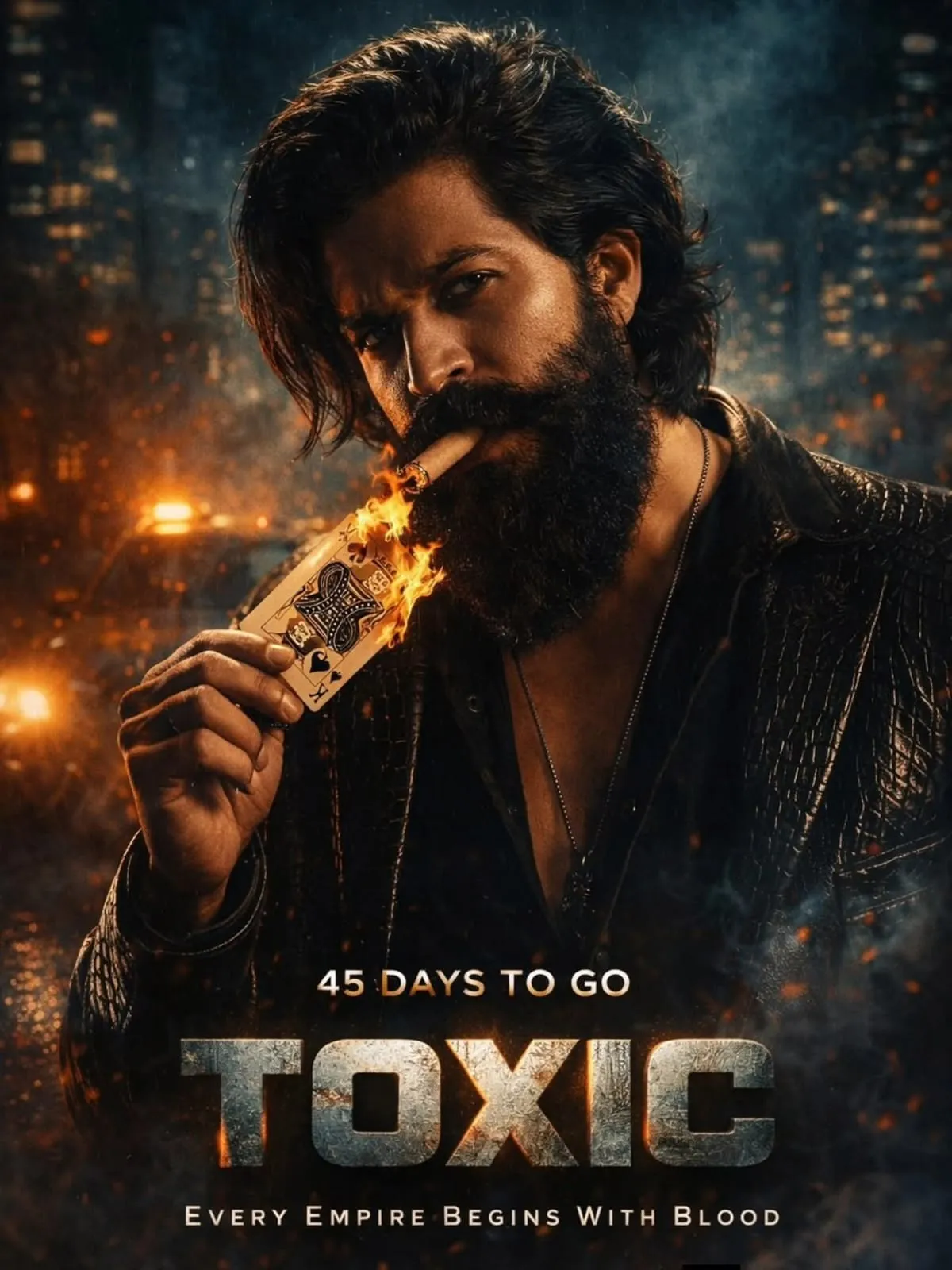
Yash and Geetu Mohandas set out to deliver something different with Toxic: A Fairy Tale for Grown-Ups. After the mass success of the KGF films, the star stepped into a psychological gangster drama that aimed to deconstruct the myth of the invincible anti-hero rather than simply celebrate it. Directed by Mohandas and co-written with Yash, the film follows Raya, a powerful figure building an opium empire in Portuguese-ruled Goa, while also exploring trauma, vengeance, fractured relationships and the dual presence of Ticket. On paper the ingredients promised a layered, ambitious work. What reached theatres on August 26, however, feels like a film whose potential was cut short on the editing table.
The Scale of Ambition
Toxic is not a conventional star vehicle. At nearly three hours and fourteen minutes, it attempts to blend gangster rise-and-fall tropes with psychological depth, family conflict, romance and a fever-dream visual language. Yash appears in dual roles, bringing both the swagger associated with his earlier work and a more vulnerable, experimental register as Ticket. The production design, period setting, action choreography and technical craft create a world that feels large and distinctive. Female characters played by performers including Nayanthara, Kiara Advani, Tara Sutaria, Huma Qureshi and Rukmini Vasanth are given more screen presence than is typical in the genre.
The intention was clear: to examine the toxic consequences of power, masculinity and inherited violence rather than simply stage them for spectacle. That ambition is what makes the final result so frustrating. The film contains the raw material for something memorable, yet the finished product leaves much of it underdeveloped or buried.
Where the Narrative Collapses
The central problem is an overstuffed story that never finds the space to breathe. Major plot points, character introductions and relationship foundations are compressed into the early stretches of the film. Within the first half-hour, a large percentage of the key narrative beats have already occurred. Viewers are asked to absorb complex histories, shifting loyalties and emotional stakes at a pace that prevents genuine connection.
Information arrives in fragments. Characters appear and exit without sufficient grounding. Subplots multiply. The screenplay scratches the surface of promising ideas—revenge, guilt, abandonment, the weight of a violent legacy—then moves on before those ideas can deepen. The result is a story that feels simultaneously rushed and overlong. There is too much plot and too little time devoted to making any single strand land with force.
This lack of clarity extends to tone. Toxic tries to function as a gangster drama, an emotional family saga and a psychological thriller at once. It never fully commits to one mode, leaving the audience uncertain about what kind of experience they are meant to have. Moments that should carry emotional weight often feel unearned because the groundwork has been skipped.
The Editing as the Decisive Failure
If the narrative is overstuffed, the editing is the instrument that turns complexity into chaos. The cutting is frequently abrupt and disorienting. Transitions feel random. Scenes jump without establishing spatial or emotional continuity. At times the pace slows into prolonged, deliberate stretches that drain momentum; at others it accelerates so rapidly that meaning is lost.
The approach appears to prioritise kinetic energy and visual impact over coherence. While some sequences involving the dual roles are stitched together with technical skill, the overall rhythm works against the story. Crucial character moments and relationship developments are reduced to fleeting impressions rather than developed scenes. The audience is left piecing together context that the film itself should have provided.
A project of this scale and ambition required patient, purposeful editing—one that allowed the world and its people to settle before escalating the chaos. Instead, the final cut often feels like a condensed version of a longer, more carefully structured film. The emotional and psychological layers that Geetu Mohandas seemed intent on exploring are the first casualties.
Style Without Sufficient Substance
Visually, Toxic is frequently impressive. The frames are carefully composed, the action is staged with force, and the period atmosphere is tangible. Yash’s screen presence remains commanding, particularly when the dual roles allow him to shift registers. Certain sequences demonstrate the director’s distinctive sensibility and willingness to take risks.
Yet style cannot compensate for the absence of narrative discipline. When the audience cannot follow the relationships or care about the stakes, even striking images begin to feel decorative. The film’s length compounds the problem. At over three hours, every sequence needs to justify its presence. Too many do not. The result is a theatrical experience that can feel exhausting rather than immersive.
Female characters, despite the strong casting, often function more as reflections of Raya’s journey than as fully realised individuals with their own arcs. Trauma and relationships are introduced but rarely given the space to develop into something resonant. The psychological dimension that the film advertises remains largely surface-level.
What Might Have Been
It is possible to imagine a version of Toxic that works. A tighter, more deliberate edit could have preserved the ambition while giving characters and relationships room to grow. Clearer prioritisation of story strands might have allowed the psychological and emotional themes to emerge with greater impact. Restraint in the early exposition and greater patience in the middle sections could have turned the same material into a more coherent and affecting film.
Instead, the finished work stands as an example of how post-production decisions can undermine even strong foundational elements. The performances, the production values and the conceptual boldness are visible. They simply never coalesce into a satisfying whole.
A Cautionary Result
Toxic will likely be remembered as a bold but flawed experiment. Yash’s willingness to step outside familiar territory and Mohandas’s attempt to bring a different sensibility to a large-scale gangster narrative deserve acknowledgment. The film’s failure to realise that potential, however, is hard to overlook. An overstuffed narrative and frantic, inconsistent editing leave the most interesting ideas buried beneath the surface chaos.
For audiences and filmmakers alike, the project serves as a reminder that ambition alone is not enough. Scale, star power and striking visuals require the discipline of clear storytelling and purposeful craft. In the case of Toxic, those final, decisive choices on the edit table proved costly. What remains is a film that teases greatness without quite delivering it—an autopsy of unfulfilled promise rather than the distinctive psychological drama it set out to become.
Read more – Instantdua.com