
Why Cooling Has Become Essential
India’s summers are becoming harder to ignore every year now. Extreme heat is affecting cities, homes, workplaces, and daily routines. For many families, an air conditioner no longer feels luxurious. It has slowly become necessary for comfortable and sometimes safer indoor conditions. This growing dependence, however, comes with another environmental problem that receives less attention.
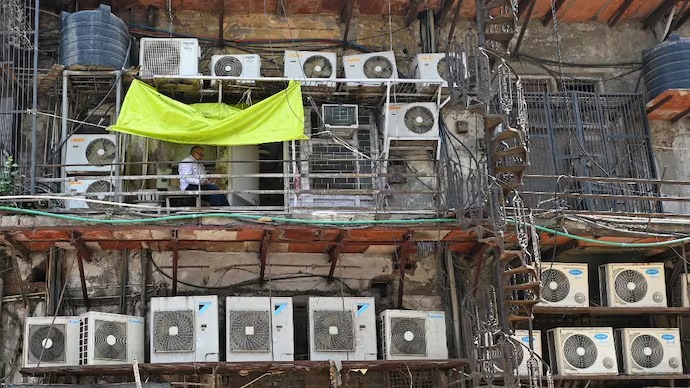
India’s air conditioner demand is increasing as temperatures rise across different regions. More households are purchasing split ACs, window units, and energy-efficient cooling systems. Offices, shops, schools, hospitals, and transport facilities are also increasing their cooling capacity. The result is a complicated situation where people need more cooling while the planet needs fewer emissions.
More Heat Means More Cooling
Hot weather naturally pushes people toward stronger cooling solutions inside buildings. When outdoor temperatures remain high for longer periods, AC systems often operate throughout most of the day. That extended usage can significantly increase household electricity consumption during summer months. The situation becomes particularly noticeable during severe heatwaves across heavily populated urban areas.
Cities can experience even hotter conditions because concrete surfaces absorb considerable amounts of daytime heat. Buildings, roads, vehicles, and limited vegetation can create an urban heat island effect. People living inside these environments often depend heavily on mechanical cooling. Unfortunately, widespread AC usage can add more pressure to electricity systems during already difficult summer periods.
India’s Growing AC Market
India has become one of the major markets for residential cooling equipment. Rising incomes, expanding urban populations, and changing lifestyles are supporting this rapid growth. Air conditioners are increasingly appearing in middle-income households that previously relied mainly on fans and coolers. Affordable financing and wider product availability have also made ownership easier.
The market is not growing because people suddenly prefer colder rooms. Climate conditions themselves are becoming an important reason behind purchasing decisions. Families dealing with uncomfortable nighttime temperatures may find sleeping difficult without mechanical cooling. Businesses also require reliable indoor temperatures to protect equipment, products, workers, and customers.
Electricity Demand Creates Another Problem
An air conditioner does not create cooling without consuming energy from somewhere. That electricity must be generated, transmitted, and delivered through a large power network. When electricity generation depends heavily on fossil fuels, higher AC usage can indirectly increase greenhouse gas emissions.
Summer electricity demand can become especially challenging during extreme temperature events. Millions of cooling appliances may operate simultaneously when temperatures reach uncomfortable levels. Power networks then face unusually high demand from residential buildings, commercial properties, and industrial facilities. Additional generation capacity may become necessary when peak demand keeps rising.
This creates an uncomfortable cycle for India’s energy system. Hotter weather increases air conditioner usage across the country. Greater electricity consumption can increase emissions when cleaner power sources remain insufficient. Those emissions contribute to global warming, which can eventually produce more intense heat. The same problem can therefore keep reinforcing itself.
Refrigerants Also Matter
Electricity consumption is not the only environmental concern connected with modern air conditioners. Refrigerants used inside cooling equipment can also influence climate change when they escape into the atmosphere. Some older refrigerants have extremely high global warming potential compared with ordinary greenhouse gases.
Manufacturers have been moving toward refrigerants with lower environmental impacts. Newer technologies can reduce the climate damage associated with refrigerant leakage. Proper servicing is still extremely important because damaged systems can release refrigerants unnecessarily. Poor maintenance can therefore create environmental problems beyond higher electricity consumption.
Consumers rarely think about refrigerant technology when purchasing an AC. Most buyers naturally focus on cooling capacity, price, electricity ratings, and available features. Yet refrigerant choice can become increasingly important as India expands its cooling infrastructure. Environmental performance will likely matter more in future purchasing decisions.
Energy Efficient ACs Can Help
Not every air conditioner has the same electricity requirements during daily operation. Energy-efficient models can deliver similar cooling while using comparatively less electricity. Higher efficiency can reduce monthly electricity bills while also lowering emissions associated with power consumption.
India’s energy efficiency standards have encouraged manufacturers to develop better-performing cooling equipment. Consumers can also compare efficiency ratings before purchasing a new AC. Selecting an appropriate capacity is equally important because oversized systems may waste energy under certain operating conditions.
However, simply buying an efficient AC does not solve everything. Poor installation, dirty filters, blocked outdoor units, and incorrect temperature settings can reduce efficiency. Regular servicing can help equipment operate closer to its intended performance. Small operational choices can therefore influence long-term energy consumption considerably.
Room Temperature Makes A Difference
Many people set air conditioners to extremely low temperatures during harsh summer afternoons. That habit can increase electricity consumption without necessarily improving comfort significantly. A moderate indoor temperature can often provide sufficient relief while requiring less energy from the cooling system.
The difference becomes meaningful when millions of households make similar decisions. Even small reductions in electricity usage can become significant when multiplied across large populations. Better insulation, curtains, ventilation, and shaded windows can also reduce the cooling burden inside buildings.
Modern buildings need to consider cooling before construction is completed. Building orientation, window placement, insulation, rooftop materials, and natural ventilation can influence indoor temperatures. Good design can reduce dependence on air conditioning without sacrificing basic comfort.
Rooftop Solar Offers Another Option
India’s expanding renewable energy capacity creates an interesting opportunity for reducing AC-related emissions. Rooftop solar panels can generate electricity close to where cooling demand occurs. This approach can reduce dependence on grid electricity during sunny daytime hours when AC usage is often high.
Solar power cannot solve every cooling problem by itself, however. Installation costs, roof availability, maintenance requirements, and electricity storage remain important considerations. Apartments may also face practical limitations because individual residents cannot always control shared rooftop spaces.
Still, combining efficient ACs with renewable electricity can provide meaningful environmental benefits. It can also protect households against some future increases in electricity costs. For commercial buildings, solar-powered cooling could become an increasingly attractive investment.
The Future Needs Smarter Cooling
India cannot realistically ask millions of people to stop using air conditioners. During dangerous heat conditions, cooling can be essential for comfort, productivity, and protection from excessive temperatures. The more realistic challenge involves making cooling systems cleaner, cheaper, and more efficient.
Smart thermostats and connected AC systems can help control unnecessary operation. Sensors can adjust cooling according to room occupancy and changing temperatures. Better insulation can prevent cooled air from escaping rapidly through poorly sealed spaces. These improvements may sound small individually, but their combined impact could become substantial.
The country also needs stronger attention toward passive cooling methods. Traditional building designs, shaded courtyards, reflective rooftops, vegetation, and improved ventilation can reduce indoor heat naturally. Such methods will not replace ACs everywhere, especially during extreme heat. They can nevertheless reduce the amount of time cooling machines need to operate.
What Consumers Can Actually Do
Consumers have several practical choices when purchasing or operating an air conditioner. Selecting an appropriately sized and energy-efficient model should be the first consideration. Buyers should also check installation quality because even expensive equipment can perform poorly when installed incorrectly.
Keeping filters clean can help maintain proper airflow through the system. Outdoor units should remain free from unnecessary obstruction and excessive dirt. Doors and windows should remain closed while AC systems are operating whenever practical. Setting a reasonable temperature can also reduce unnecessary electricity consumption.
When replacing an old AC, consumers should consider the complete operating cost rather than purchase price alone. A cheaper machine may consume considerably more electricity throughout several years of usage. Paying slightly more for efficient equipment can sometimes provide better value over its entire operating life.
India Faces A Difficult Cooling Choice
India’s air conditioner dilemma is unlikely to disappear anytime soon. Rising temperatures will continue pushing households and businesses toward mechanical cooling solutions. At the same time, increasing AC usage can place additional pressure on electricity networks and climate targets.
The answer is not to deny people access to cooling during increasingly severe summers. Instead, India needs a broader strategy involving efficient appliances, cleaner electricity, responsible refrigerants, better buildings, and smarter cooling practices. Manufacturers, policymakers, builders, electricity providers, and consumers all have different roles within that transition.
Conclusion: Cooling Without Increasing Climate Pressure
India’s air conditioner boom reflects a basic reality of modern life, where rising temperatures are changing how people live and work. Cooling systems provide essential relief, but their growing electricity demand and refrigerant impacts create serious environmental concerns. More efficient AC technology, renewable electricity, better building design, regular maintenance, and sensible temperature settings can reduce that pressure significantly. The country’s future cooling strategy will need to balance human comfort with environmental responsibility carefully. As demand continues growing, smarter choices today can help create a cooler and more sustainable India tomorrow.
Read More :- pixelperkes.com